Code Yellow: How we outperformed Epic and saved a $25M client
Cedar's biggest client threatened to churn, leading to a performance bakeoff with Cedar's biggest competitor
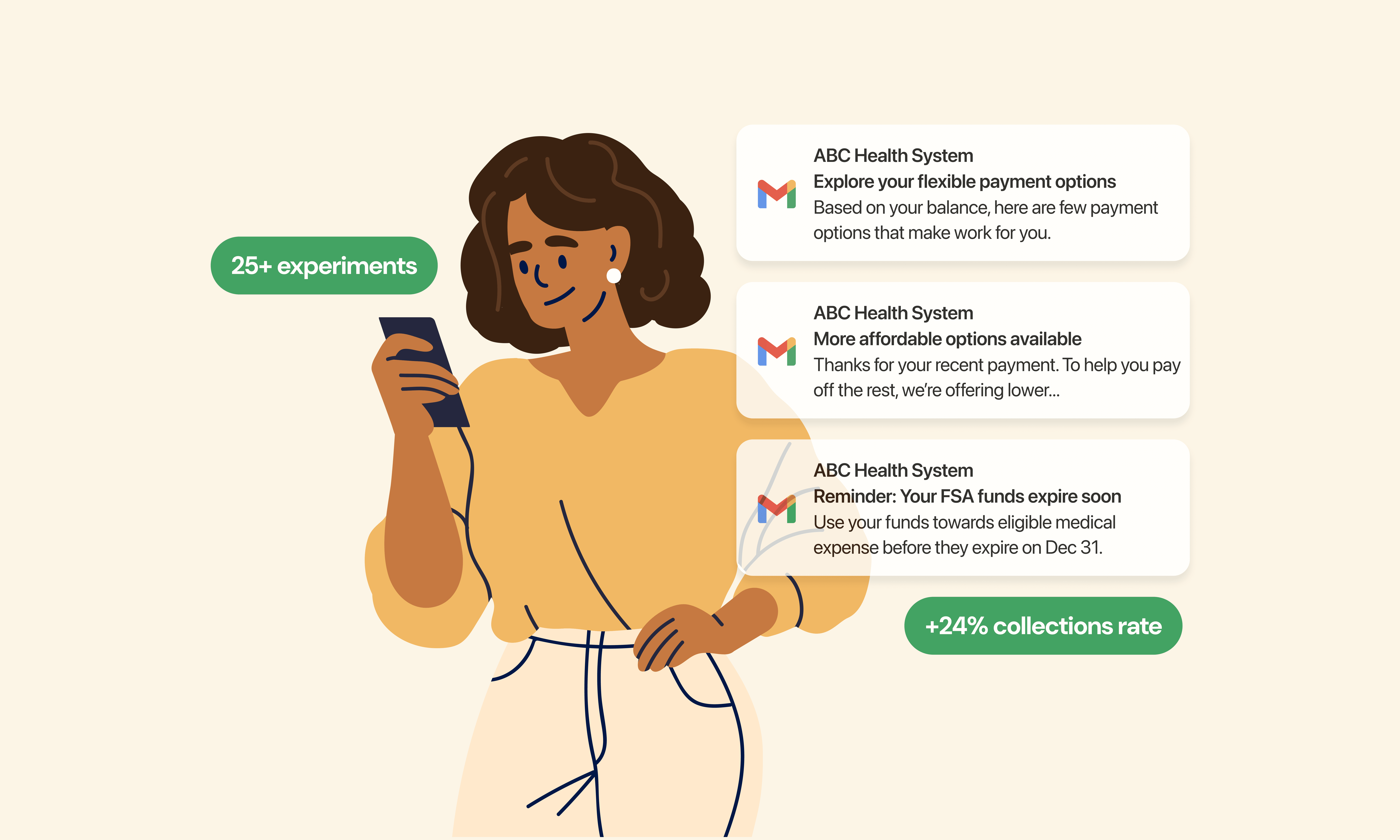
I lead the Design response to this - 25+ experiments over the course of 5 months. The result was outperforming the competitor by 24%, saved the client, and established a new rapid experimentation model.
Client
Cedar
Type
Cedar
Year
2025
Process
Identifying the opportunity
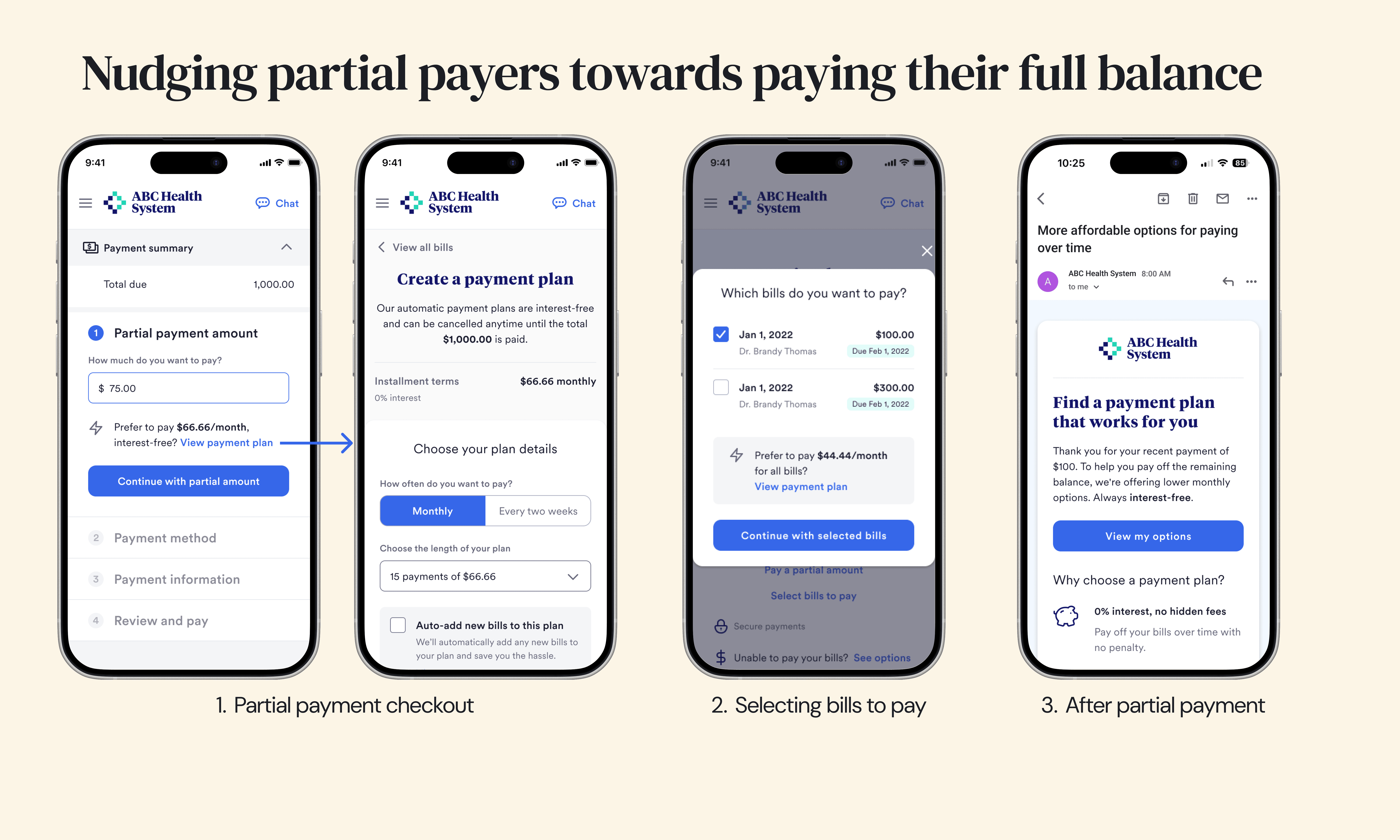
A funnel analysis from Data Science helped surface where patients were dropping off: insured patients with large bills had the highest drop-off rate at the top of the funnel. Rather than redesign the full experience, I focused on low-cost interventions — communications we could ship and test within days. Low effort, high learnings.
Running minimum viable tests
I designed rapid experiments using a test-and-learn framework, starting with one-off emails to small patient segments. Each experiment had a clear hypothesis, defined audience, and clear metrics (engagement and collection rate). We shipped 25+ experiments over 5 months.
Synthesizing research into experiments
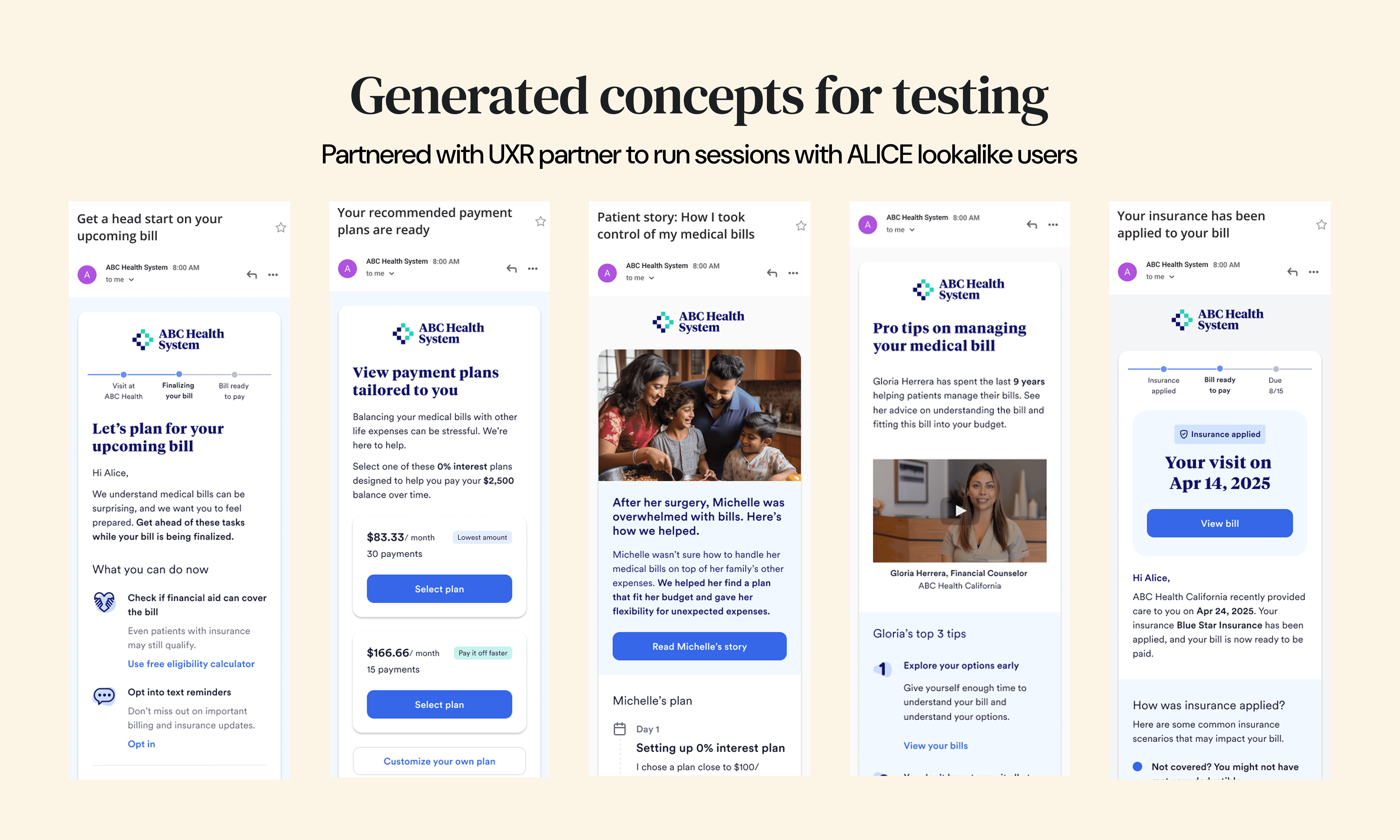
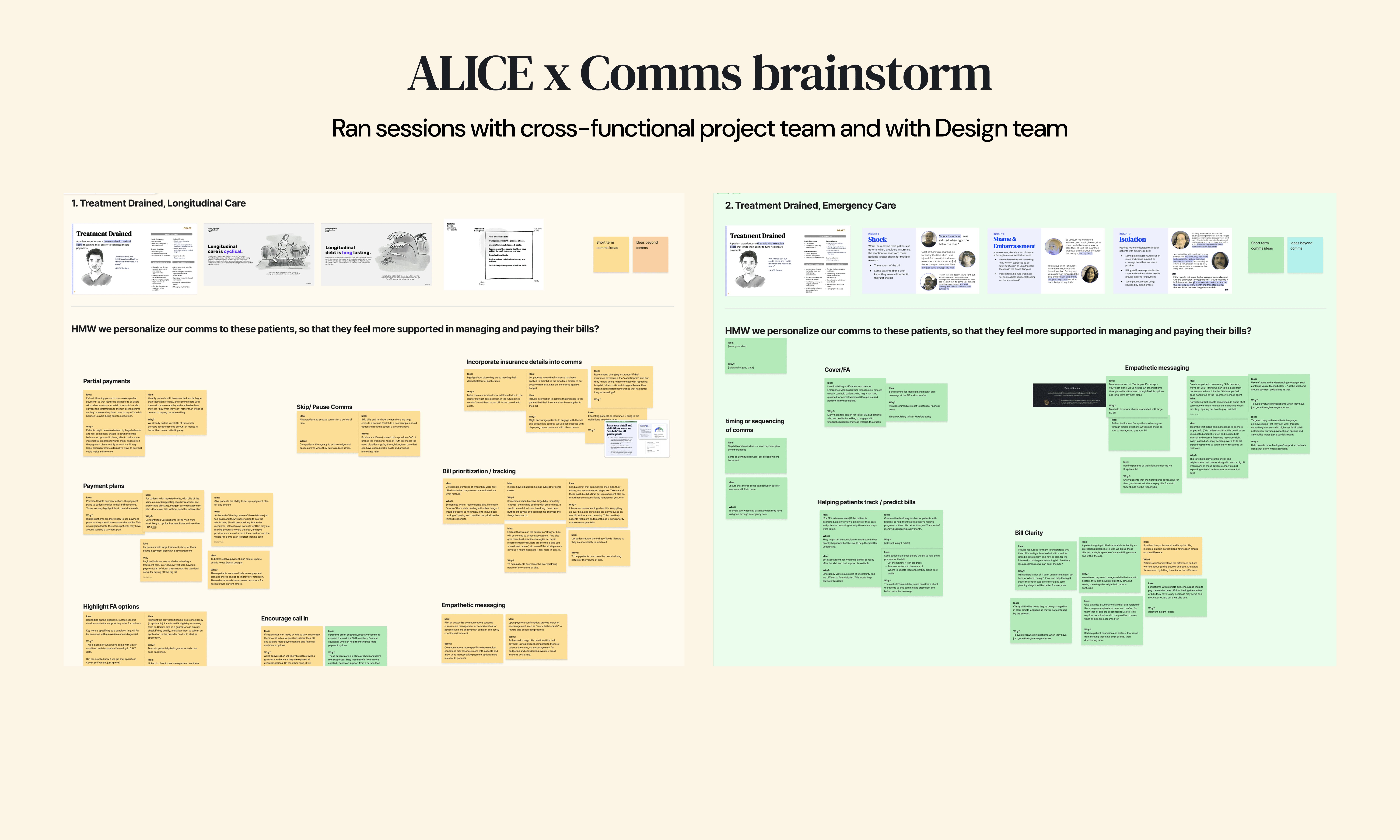
I connected the funnel findings to existing UXR on ALICE patients — asset-limited, income-constrained people facing impossible financial choices. That reframe changed how I approached messaging to be less transactional and more options-focused.
Iterating and scaling what worked
Winning experiments got refined and scaled. A flexible payment options email started as a single-segment MVT and became a dynamic, personalized communication that adapted based on balance size and number of bills. The result: +15.7% payment rate for patients with balances between $500 and $2,500, a historically hard to collect on population.
Enabling the broader team
Beyond my own experiments, I built infrastructure for the broader team: a designer's manual for comms personalization, a Claude skill for email copywriting, and a legal x data guidance doc so other designers could run experiments with fewer blockers.
Outcome
Cedar outperformed competitor by 24% in collections rate, securing a renewal. Across 5 months, we shipped 25+ experiments that moved the needle on patient engagement and payment behavior, proving that thoughtful, low-code design interventions can have meaningful business impact.
